
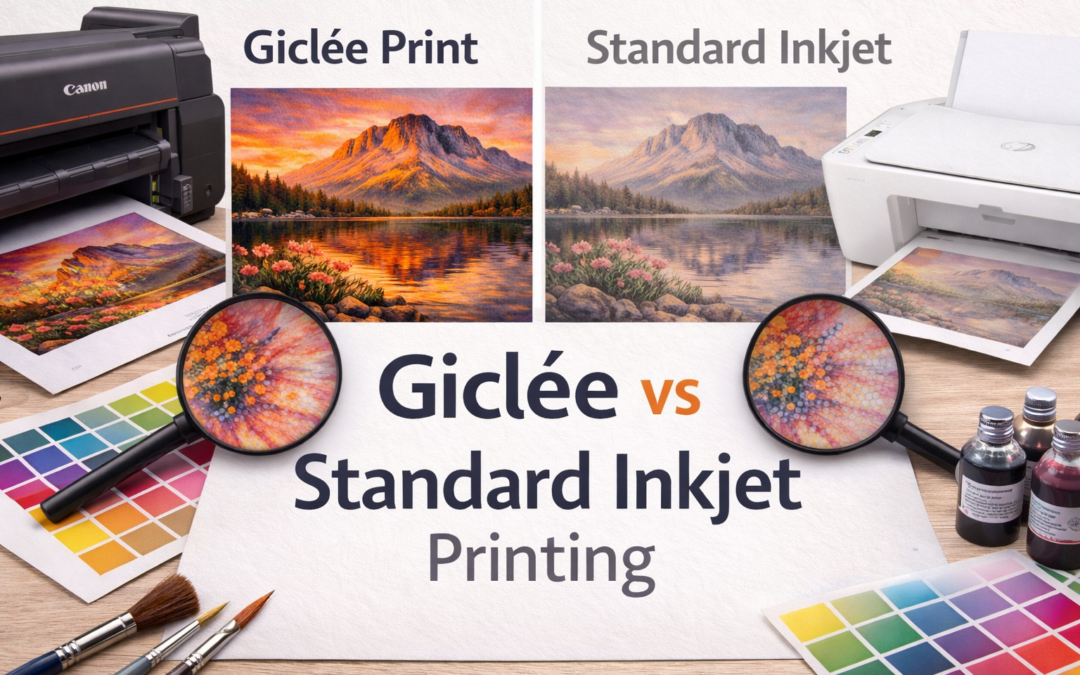
When it comes to reproducing artwork or photography, the printing method you choose can make the difference between a print that lasts decades and one that fades in months. Two popular options are giclee printing and standard inkjet printing, but the quality, longevity, and cost differences between them are substantial. This comprehensive guide explains exactly what sets these printing methods apart and helps you choose the right option for your needs.
Understanding Giclee Printing
Giclee printing (pronounced “zhee-clay”) is a fine art printing process that uses professional grade inkjet printers specifically designed for museum quality reproduction. The term originates from the French word “gicleur,” meaning “to spray,” referring to how the printer applies microscopic droplets of archival pigment ink onto fine art substrates.
What distinguishes giclee printing from standard inkjet printing is the combination of professional equipment, archival materials, and strict quality standards that ensure prints maintain their appearance for over 100 years when properly displayed.
Understanding Standard Inkjet Printing
Standard inkjet printing refers to the printing technology used in consumer grade printers found in homes and offices. These printers use basic inkjet technology to deposit ink droplets onto paper, but they typically use dye based inks and standard paper stocks that are not designed for longevity or colour accuracy.
While standard inkjet printing is perfectly adequate for everyday documents, receipts, and temporary prints, it falls short when archival quality and colour fidelity are important considerations.
Key Differences Between Giclee and Standard Inkjet Printing
1. Ink Quality and Type
Giclee Printing: Uses archival pigment based inks that are specifically formulated for longevity and colour stability. Pigment inks consist of tiny solid particles suspended in liquid, which sit on top of the paper surface rather than being absorbed. This results in prints that resist fading from UV light exposure and environmental factors for 100 years or more.
Professional giclee printers typically use 8 to 12 individual ink cartridges, including light variants of standard colours. This expanded ink set allows for smoother colour transitions and a wider colour gamut.
Standard Inkjet Printing: Typically uses dye based inks containing liquid colorants that are absorbed into the paper. While dye based inks can produce vibrant colours initially, they are much more susceptible to fading when exposed to light. Standard inkjet prints may begin to show noticeable fading within months to a few years, especially if displayed in bright conditions.
Consumer inkjet printers usually have just 4 to 6 ink cartridges (cyan, magenta, yellow, black, and sometimes light cyan and light magenta), which limits the colour range and smoothness of gradations.
2. Print Resolution and Quality
Giclee Printing: Professional giclee printers operate at very high resolutions, typically 2400 DPI or higher, with sophisticated dot patterns that create incredibly smooth tonal transitions. The combination of high resolution and expanded ink sets means giclee prints can reproduce even the most subtle details and colour variations in artwork.
Professional colour management ensures that what you see on a calibrated screen matches the printed output, making giclee printing ideal for reproducing artwork where colour accuracy is critical.
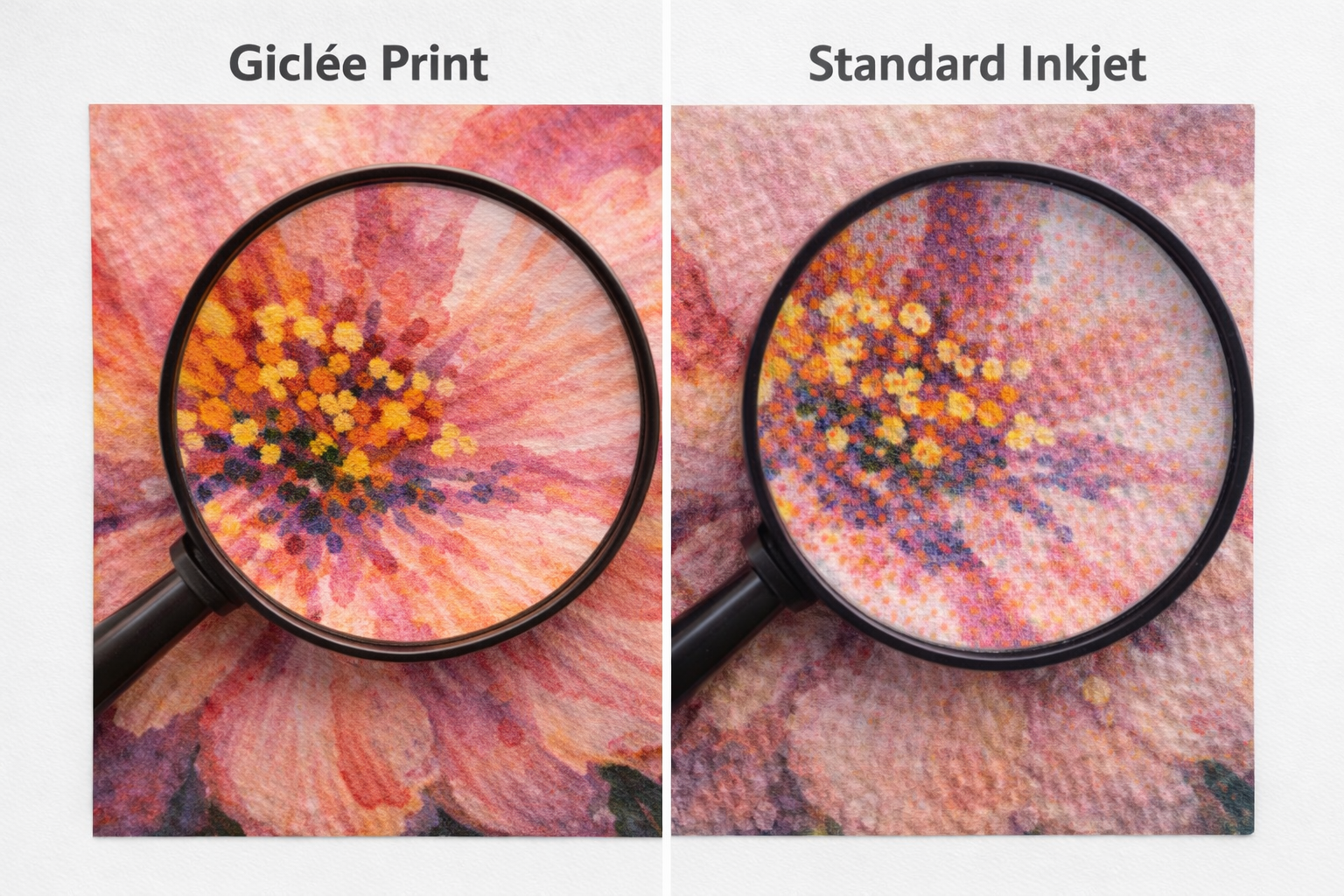
Standard Inkjet Printing: While many consumer inkjet printers claim high DPI specifications, the actual print quality is limited by the basic ink set and lack of professional colour management. Standard inkjet prints often show visible banding in gradients, less accurate colours, and reduced detail in shadow and highlight areas.
3. Paper and Substrate Quality
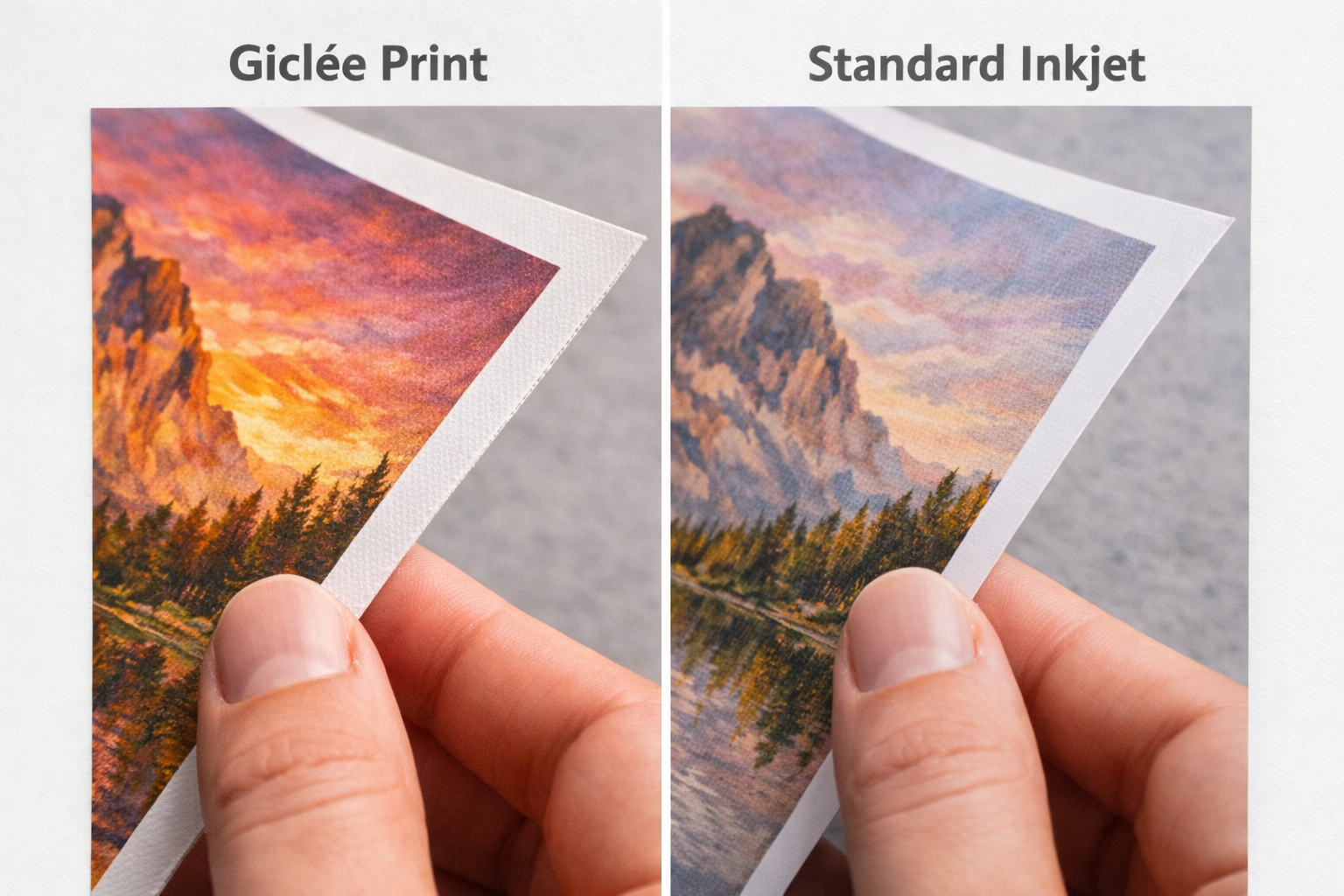
Giclee Printing: Uses museum quality fine art papers that are acid free and designed for archival longevity. These papers are typically made from 100% cotton rag or alpha cellulose and come in various weights, textures, and finishes. Popular options include:
- Hahnemuhle Photo Rag (308gsm smooth cotton rag)
- Canson Platine Fibre Rag (310gsm smooth paper)
- Hahnemuhle German Etching (310gsm textured paper)
- Archival canvas for gallery wrapped prints
These papers have specific coatings optimised for pigment ink absorption and are designed to remain stable and resist yellowing over time.
Standard Inkjet Printing: Typically uses basic copy paper or low cost “photo paper” that contains acids and optical brightening agents. These papers may look bright initially but can yellow and deteriorate over time. Standard photo papers are often resin coated and designed for dye based inks, which limits their archival potential even if better inks are used.
4. Colour Gamut and Accuracy
Giclee Printing: The expanded ink set and professional colour management workflow used in giclee printing allows for reproduction of a much wider colour gamut. This means giclee prints can accurately reproduce colours that would be impossible to match with standard 4 colour printing, including rich blues, vibrant oranges, and subtle earth tones.
Professional giclee services use ICC colour profiles specific to each paper type and regularly calibrate their equipment to ensure consistent, accurate colour reproduction from one print to the next.
Standard Inkjet Printing: The limited 4 to 6 ink configuration restricts the range of colours that can be accurately reproduced. Certain colour ranges, particularly saturated blues, greens, and oranges, may appear dull or shifted compared to the original. Without proper colour management, results can vary significantly between prints.
5. Longevity and Archival Quality
Giclee Printing: When produced on archival paper with pigment inks, giclee prints are rated to last 100 to 200 years without significant fading when displayed under normal indoor lighting conditions. This longevity is based on accelerated aging tests conducted by organisations like Wilhelm Imaging Research.
This archival quality makes giclee printing suitable for museum collections, galleries, and any application where the print needs to maintain its appearance for decades or generations.
Standard Inkjet Printing: Prints made with dye based inks on standard paper typically show noticeable fading within 1 to 5 years, sometimes much sooner if exposed to direct sunlight or displayed in humid conditions. Even when kept in ideal conditions, standard inkjet prints have a much shorter lifespan than giclee prints.
6. Cost Considerations
Giclee Printing: Professional giclee printing costs more per print due to the investment in professional equipment, premium archival materials, and expert colour management. However, when you factor in the longevity and quality, giclee printing offers better long term value for artwork and photography that deserves preservation.
Typical giclee printing costs depend on size and paper choice but represent an investment in quality that will last.
Standard Inkjet Printing: Consumer inkjet printing appears cheaper initially, but the short lifespan means you may need to reprint multiple times over the years. Additionally, the quality limitations make standard inkjet printing unsuitable for professional art reproduction or sales.
Visual Quality Comparison
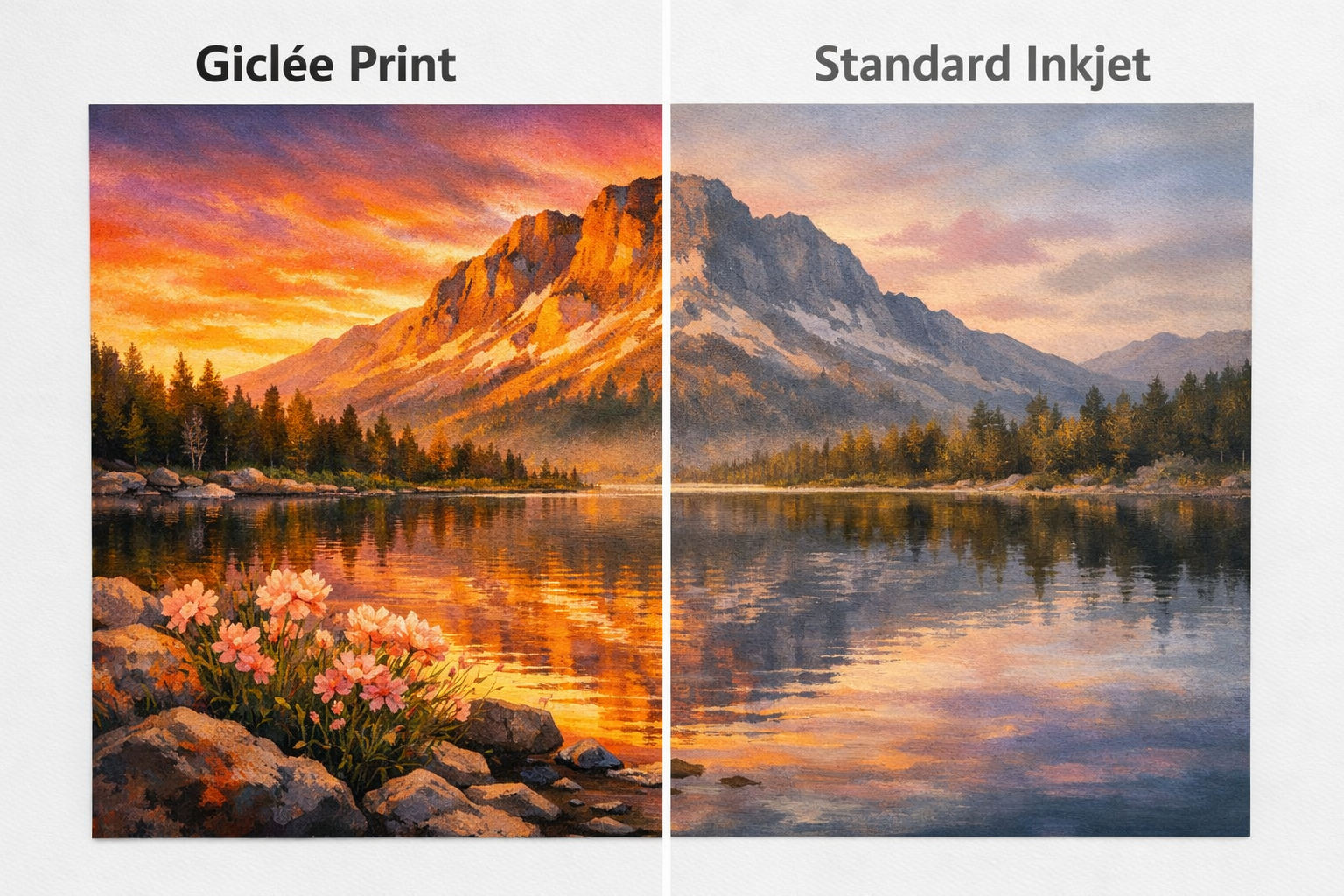
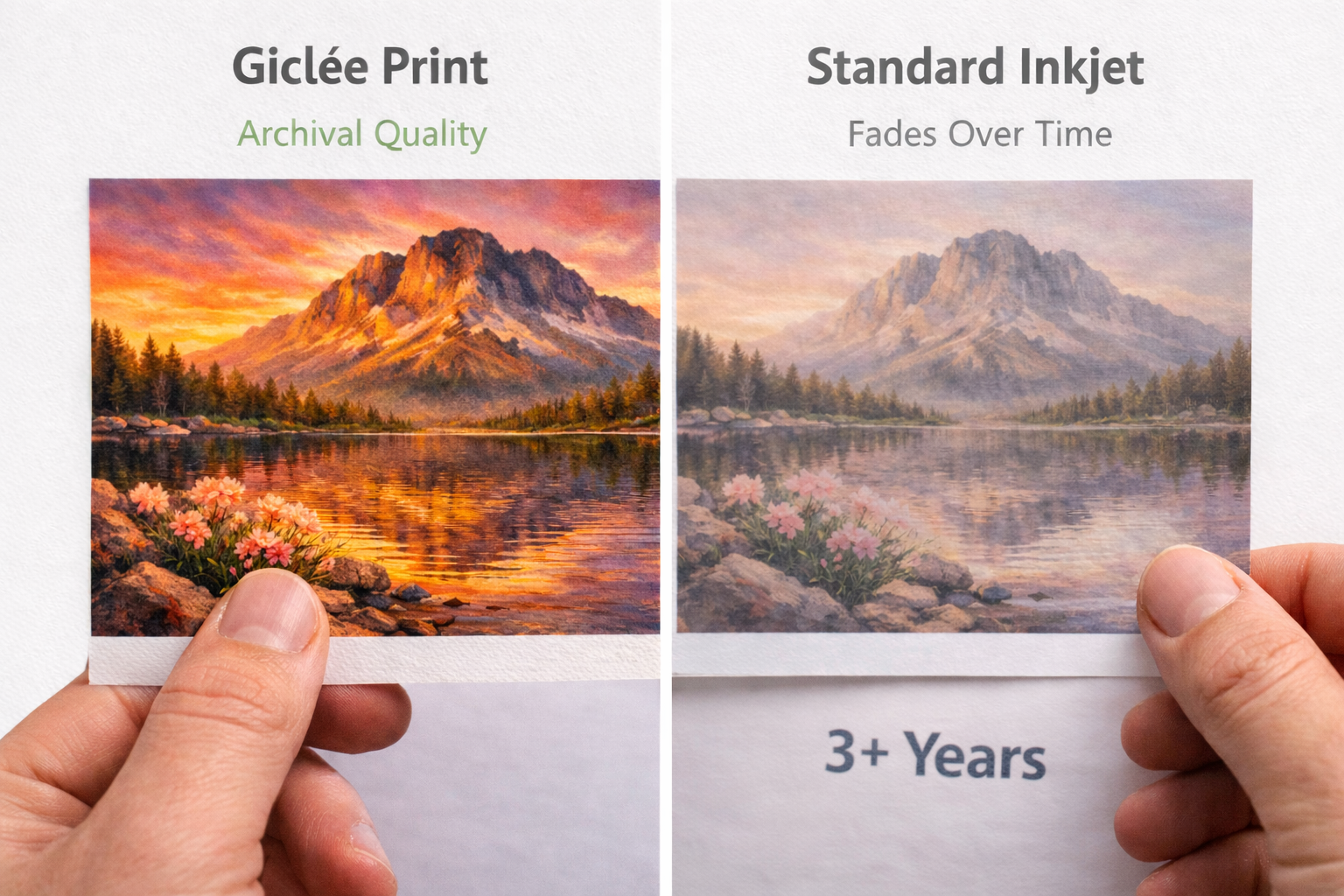
The differences between giclee and standard inkjet printing become immediately apparent when viewing prints side by side:
Detail and Sharpness: Giclee prints show crisp details even in fine textures and small elements, while standard inkjet prints may appear soft or show visible dot patterns.
Tonal Transitions: Giclee prints display smooth gradients in skies, shadows, and subtle colour shifts. Standard inkjet prints often show banding or stepped transitions in these areas.
Colour Richness: Giclee prints reproduce deep, saturated colours with accuracy, while standard inkjet prints may appear washed out or have colour shifts, particularly in blues and skin tones.
Shadow Detail: Professional giclee printing maintains detail in dark areas without blocking up shadows, whereas standard inkjet printing often loses detail in darker tones.
When to Choose Giclee Printing
Giclee printing is the right choice when:
- Creating limited edition art prints: Artists selling their work need the quality and longevity that collectors expect
- Reproducing original artwork: Paintings, watercolours, and mixed media deserve faithful colour reproduction
- Professional photography: Gallery exhibitions, portfolio prints, and fine art photography require giclee quality
- Museum or archival purposes: Prints that need to last for generations require archival materials
- Selling prints: Customers expect professional quality and longevity when investing in art
- Personal treasured images: Important photographs like wedding images, family portraits, or travel memories deserve preservation
When Standard Inkjet Printing is Sufficient
Standard inkjet printing works well for:
- Temporary displays and presentations
- Draft prints for layout and composition review
- Documents and text based materials
- Short term promotional materials
- Practice prints when testing compositions
However, for anything you want to keep long term or display publicly, giclee printing is the better investment.
Making the Right Choice for Your Project
The choice between giclee and standard inkjet printing ultimately comes down to your goals and how long you want your prints to last. If you are creating something that deserves to look its best for years to come, giclee printing offers unmatched quality, colour accuracy, and longevity.
Consider these questions when deciding:
- Will this print be displayed publicly or sold to collectors?
- Do you need the print to maintain its quality for decades?
- Is exact colour accuracy important for your artwork or photography?
- Do you want the finest detail and smoothest tonal transitions possible?
- Is this print representing your professional work?
If you answered yes to any of these questions, giclee printing is worth the investment.
Professional Giclee Printing Services
At Giclée London, we specialise in museum quality giclee printing using professional grade equipment, archival pigment inks, and premium fine art papers from leading manufacturers like Hahnemuhle and Canson. Our online designer tool makes it easy to upload your artwork, select your preferred paper type, and order prints with precise control over sizing and borders.
Every print we produce undergoes rigorous quality control to ensure it meets professional standards for colour accuracy, detail reproduction, and longevity. Whether you are an artist creating limited editions, a photographer building a portfolio, or someone wanting to preserve precious memories, we provide the expertise and quality your work deserves.
The Bottom Line
While standard inkjet printing serves a purpose for everyday documents and temporary prints, giclee printing represents a completely different level of quality. The combination of archival pigment inks, professional equipment, fine art papers, and expert colour management creates prints that not only look exceptional when first produced but maintain their beauty for 100 years or more.
For artwork, photography, and any print that matters, giclee printing is the clear choice. The investment in quality pays dividends in the lasting impact and preservation of your creative work.
Experience the difference that professional giclee printing can make. Start creating your museum quality prints today and see why artists and photographers worldwide choose giclee printing for their finest work.
Where to go next
- our giclée printing service — museum quality fine art and photo prints on archival papers
- our quality guarantee — how we stand behind colour accuracy and archival quality
- giclée printing in London — prices and options for London artists and photographers