
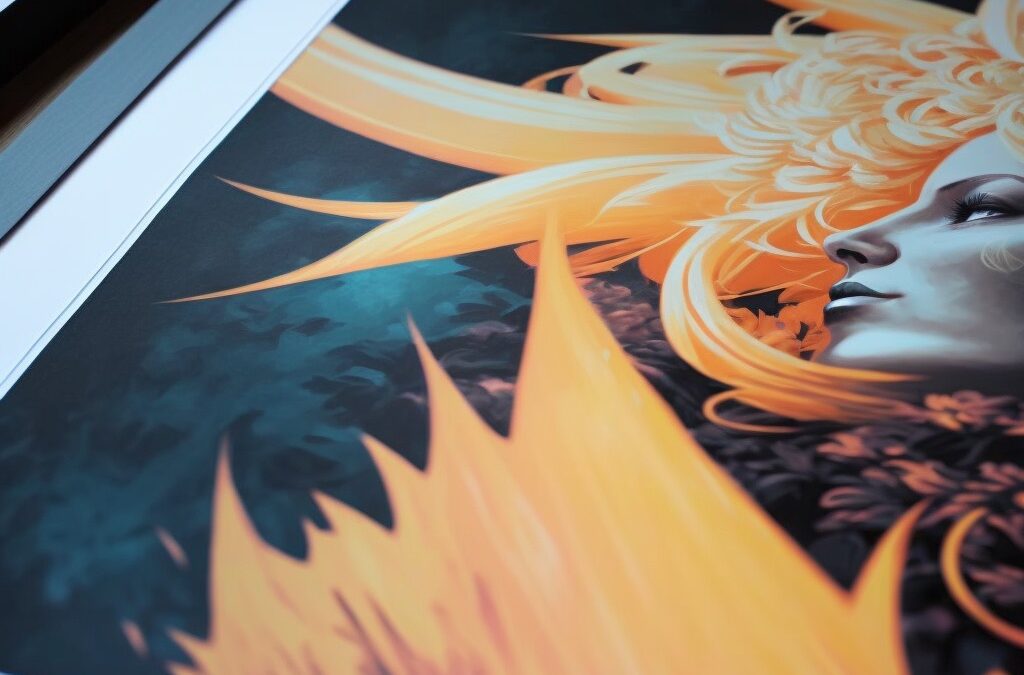
There is a moment every photographer knows. You are reviewing a shot on your monitor — the light is exactly right, the composition feels inevitable, and something in you thinks: this one deserves more than a screen. This one should live in the world.
That moment is the beginning of a conversation with giclee printing.
What Makes a Print Worthy of the Image?
The word giclee comes from the French verb gicleur, meaning to spray or squirt. It is an unglamorous origin for one of the most beautiful printing processes ever developed. But the name tells you something important: giclee printing is not about pressing ink onto paper. It is about laying it down with extraordinary precision, droplet by droplet, in layers so fine they are invisible to the naked eye.
For photographers, this distinction matters enormously. A photograph is not a flat thing. It contains tonal gradations so subtle they exist almost at the threshold of perception — a highlight that feathers into white, a shadow that holds just enough detail to suggest depth. Standard printing processes, built for speed and volume, flatten these gradients. Giclee printing does not. Its continuous tone reproduction means your image arrives on the paper the way it arrived in your mind when you pressed the shutter.
The Technology Behind the Transformation
Modern giclee printers use pigment based inks rather than dye based ones. This is not a small detail. Pigment inks sit on the surface of archival media rather than soaking into it, giving them a resistance to fading that dye inks simply cannot match. A properly produced giclee print on archival cotton rag paper can retain its original colour fidelity for well over a century under normal display conditions.
Think about what that means for your work. The photograph you make today — the one that captures something true about this particular light, this particular moment — can outlast you. It can exist as an object in the world for generations.
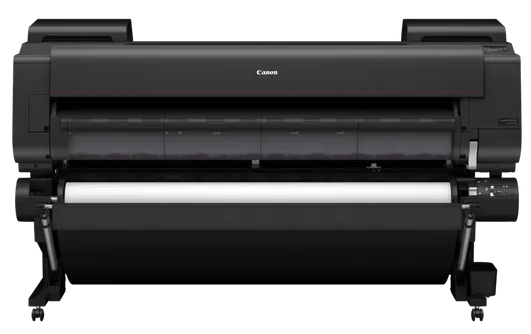
The colour gamut of high end giclee systems is equally remarkable. Printers like those in the Canon imagePROGRAF or Epson SureColor series operate with ten to twelve separate ink channels, including dedicated light cyan, light magenta, and specialised grey inks. This expanded palette allows for smoother skin tones, richer shadow detail in black and white work, and a rendering of saturated colours that holds their complexity rather than tipping into oversaturation.
The Medium Is Part of the Message
One of the things that separates giclee printing from other reproduction methods is the sheer range of surfaces it embraces. Your image does not have to live on the same coated photo paper that comes out of every high street print shop.
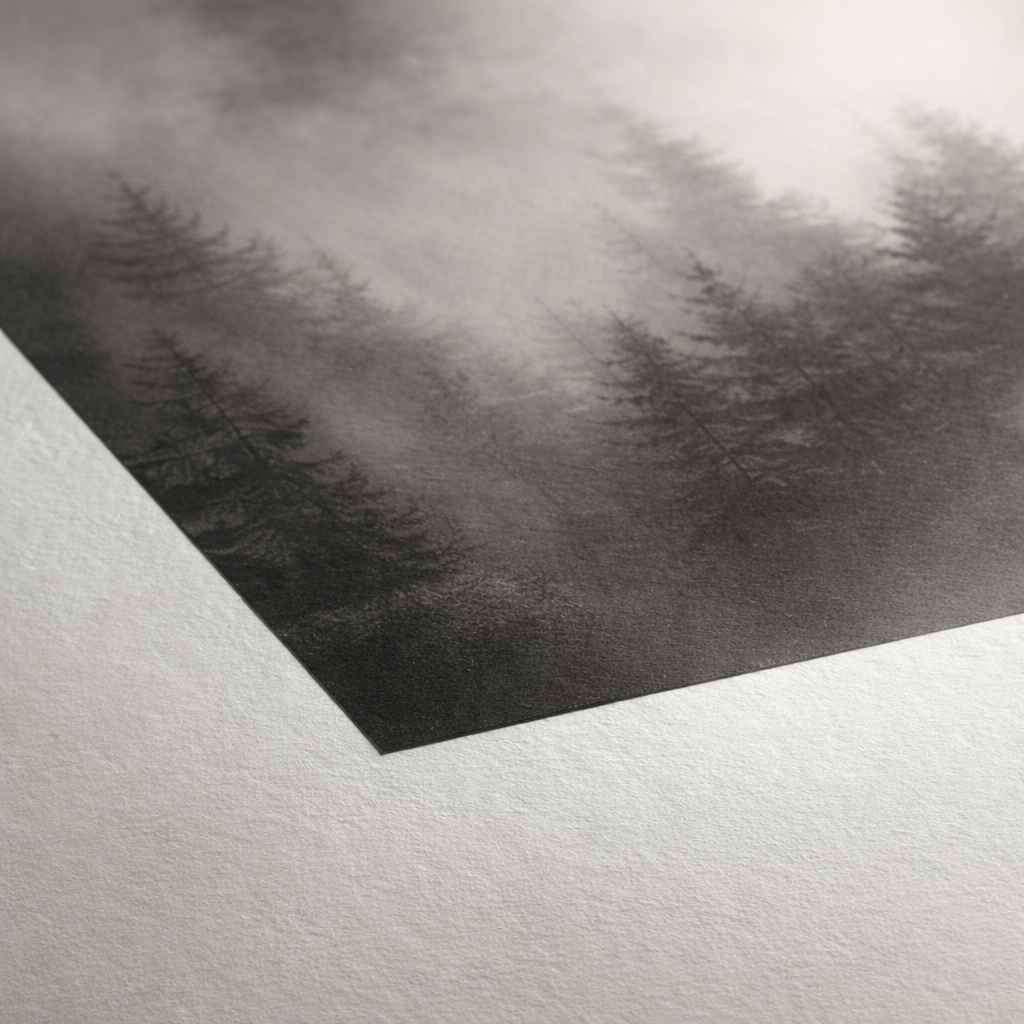
Cotton rag papers bring a softness and depth that suits contemplative, painterly work. The surface absorbs light rather than reflecting it, giving the image a presence that feels more like looking at a painting than a photograph. Baryta papers, with their bright base and fine grain, recall the warmth and tonal richness of traditional darkroom fibre prints — an ideal surface for portrait work or landscapes where you want that sense of classical photography.
For work that calls for drama, canvas is a revelation. Giclee on canvas adds texture and dimensionality, transforming a digital file into something that reads as an art object from across a room. And for photographers who want their images to feel architectural — to occupy space the way a window or a mirror does — fine art metallic papers offer a luminosity that seems almost to generate its own light.
Choosing the right medium is not a technical decision. It is an artistic one. It is asking: what does this image need in order to be fully itself?
Working With a Giclee Print Studio
If you are serious about your fine art output, working with a specialist print studio rather than a general print lab is worth the investment. A good giclee studio will offer ICC profiles specific to their paper and ink combinations, allowing you to soft proof your work accurately before a single sheet is printed.
More importantly, they will understand photography. They will know how to handle a 16 bit TIFF, how to approach a high dynamic range image, how to preserve the intent of a black and white conversion rather than imposing a generic grey curve. They are collaborators, not just operators.
Before committing to a full print run, always request a proof on your chosen paper. Calibrate your monitor. Work in a consistent colour environment. These are not obsessive habits — they are the difference between a print that delights you and one that makes you wish you had done something differently.
The Print as a Final Form
There is a quiet but persistent debate in photography about whether the digital file or the physical print represents the true final form of an image. In practice, both serve different purposes. The file travels, gets shared, lives on screens. The print stays. It accumulates presence. It becomes familiar to people who see it every day.
Giclee printing gives your photographs the dignity of permanence. It says: this image is worth the finest materials, the most careful process, the most exacting attention. It says that what you captured with your camera is not just content — it is art.
Some photographs are made to be seen once, in passing. And some photographs are made to be lived with. Giclee printing is for the second kind. It is for the images that deserve a wall, a room, a lifetime.
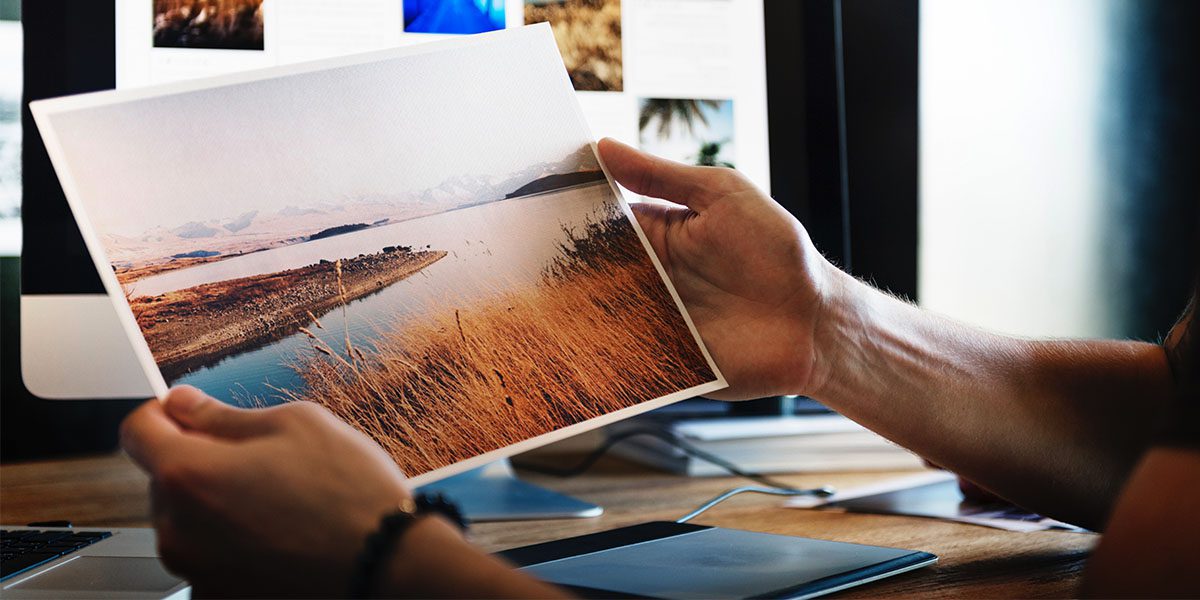
Ready to see your work in its finest form? Explore our giclee printing services and find out what the right paper and process can do for your photography.
Where to go next
- giclée printing in London — prices and options for London artists and photographers
- how to order — our simple step by step ordering process
- our quality guarantee — how we stand behind colour accuracy and archival quality