Quick answer: A giclée is a high resolution digital print made with archival pigment inks, ideal for faithful reproductions of paintings and photographs. A lithograph is printed from an inked plate: offset lithographs are mass produced posters, while hand pulled lithographs are original artist prints. A screen print pushes ink through stencils one colour at a time, giving bold, flat colour with a handmade feel. For reproducing existing artwork accurately and affordably, giclée is usually the best choice.
If you are buying art or deciding how to sell your own work, the type of print matters. It affects how the print looks, how long it lasts, how many can be made and what it is worth. Here is a clear, practical comparison of the three most common art print types.
What is a giclée print?
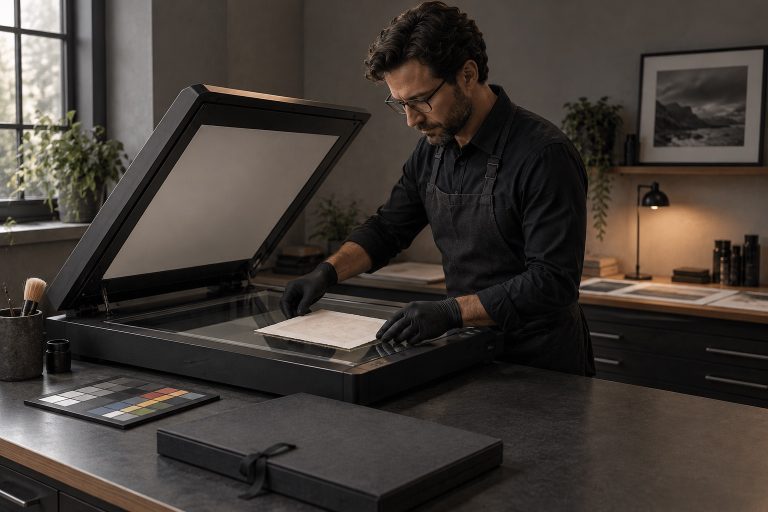
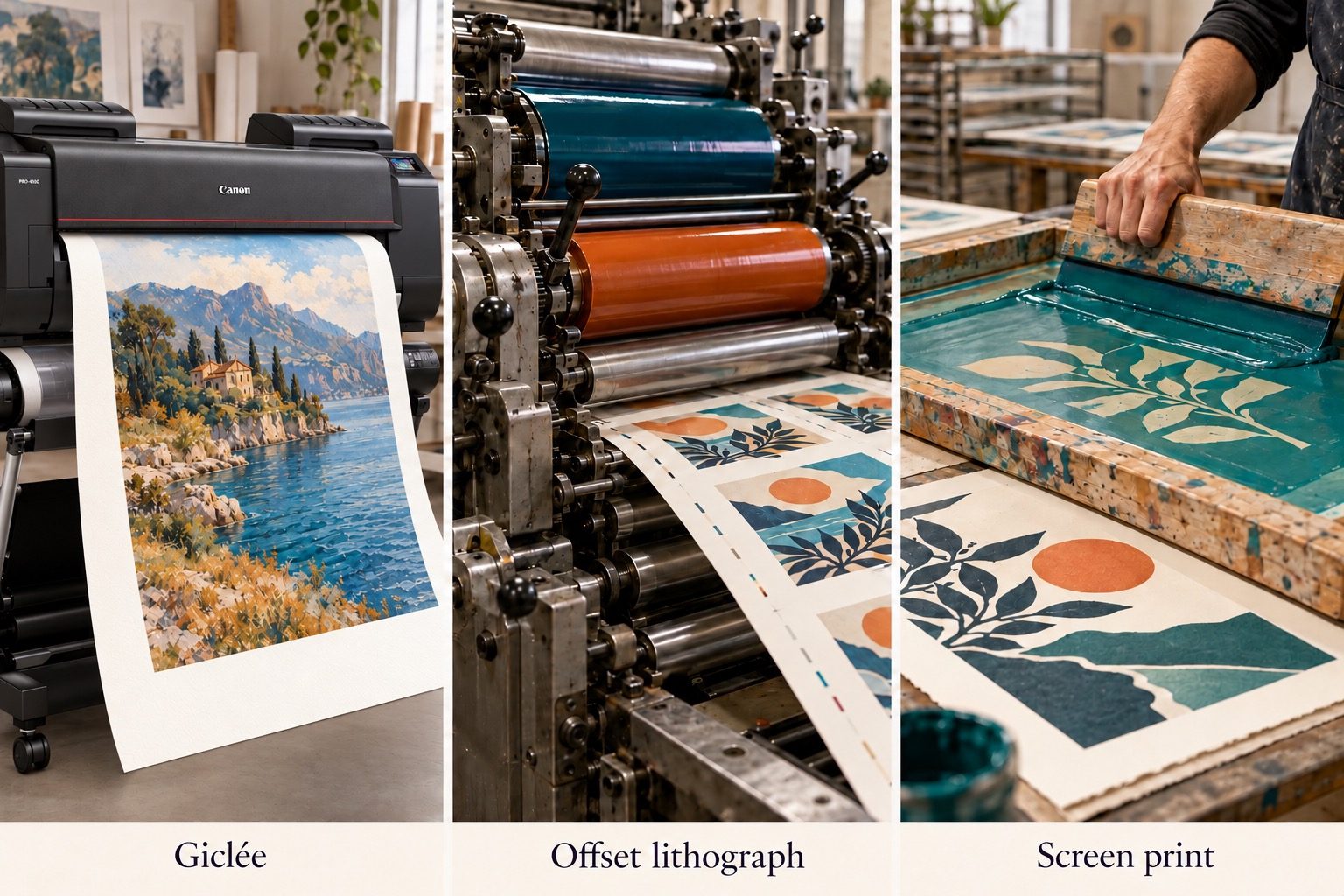
Giclée (pronounced zhee clay) is a digital printing method for fine art. The artwork is scanned or photographed at high resolution, colour corrected, and printed on a professional large format printer that sprays microscopic droplets of pigment ink onto archival paper or canvas.
At Giclée London we print on Canon imagePROGRAF Pro printers with 12 archival pigment inks, giving a far wider colour range than standard printing, on papers from Hahnemühle, Innova and Origin. Read our full guide to what giclée printing is.
- Best for: reproductions of paintings, drawings, illustration and photography
- Colour: continuous tone with subtle gradients and a very wide colour range
- Quantity: from a single print, with every print matching
- Longevity: rated for 100+ years with archival inks and papers
What is a lithograph?
The word lithograph covers two very different things, which is why it causes so much confusion.
Offset lithographs
Offset lithography is the commercial printing process used for posters, books and magazines. The image is broken into a pattern of tiny cyan, magenta, yellow and black dots and printed at high speed in large runs. Offset prints are affordable but have a narrower colour range, and under magnification you can see the dot pattern. Many decorative “lithograph” prints sold online are offset prints.
Hand pulled artist lithographs
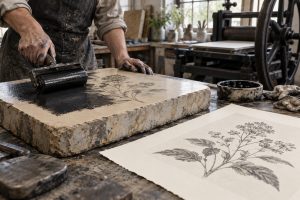
Traditional lithography is a fine art printmaking technique. The artist draws directly onto a limestone block or metal plate, which is treated so that ink sticks only to the drawn areas, and each colour is printed by hand. These are original prints, not reproductions, and are usually made in small signed editions.
What is a screen print?
Screen printing, also called serigraphy, pushes ink through a fine mesh screen using a stencil for each colour. Colours are laid down one at a time, so a print with eight colours needs eight separate screens and passes. The result is bold, flat, opaque colour with a slightly raised, tactile surface.
- Best for: graphic designs, pop art and bold flat colour
- Colour: solid layers rather than smooth gradients
- Quantity: setup costs make very small runs expensive
- Character: each print can vary slightly, which many collectors love
Giclée vs lithograph vs screen print compared
| Giclée | Offset lithograph | Screen print | |
|---|---|---|---|
| How it is made | Digital, archival pigment inks | Plates, four colour dots | Stencils, one colour at a time |
| Colour range | Very wide, smooth tones | Limited, visible dots | Bold, flat colour |
| Best use | Reproducing paintings and photos | Posters and large runs | Graphic and pop art designs |
| Minimum run | One print | Hundreds or more | Small runs possible, setup per colour |
| Longevity | 100+ years with archival materials | Varies, often lower | Long lasting with quality inks |
| Cost per print | Moderate, no setup cost | Very low in volume | Higher for small runs |
Which print should you choose?
If you are an artist selling reproductions
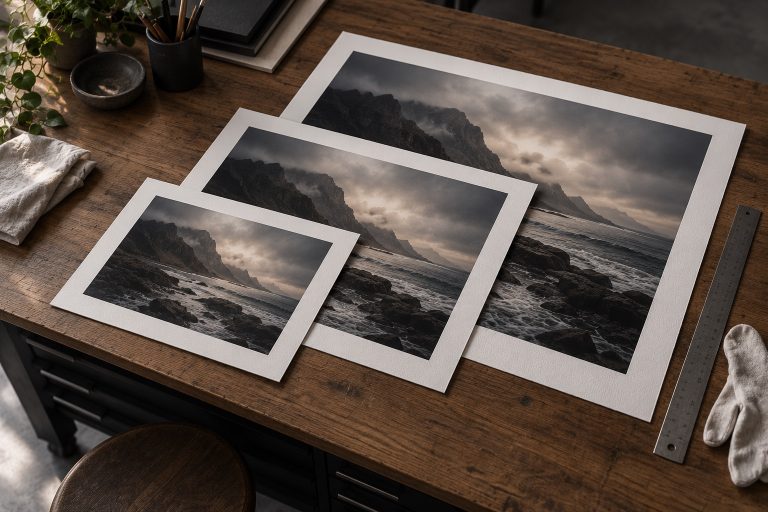
Giclée is the natural choice. You can print on demand without holding stock, test a paper with a single print, and produce signed, numbered limited edition giclée prints where print 1 matches print 50. Our giclée printing for artists guide covers editions and pricing.
If you design for bold flat colour
Screen printing gives a beautiful handmade quality that suits graphic work designed for that process.
If you are buying art
Check what you are actually getting. A “lithograph” may be a mass produced offset poster or a hand pulled original. A giclée should state the paper, ink and edition size. Signed and numbered limited editions on archival paper hold their value best.
If you are a photographer
Giclée on cotton rag or baryta paper is the standard for exhibition and sale prints. See our fine art photography printing service.
How to recognise a quality giclée print
- It names the paper, ideally a cotton rag, etching or baryta fine art paper
- It uses archival pigment inks rather than dye inks
- Limited editions are signed and numbered in pencil, with a stated edition size
- A certificate of authenticity often accompanies limited editions
- Under magnification there is no visible dot pattern, just smooth tone
Our guide to displaying and caring for giclée prints explains how to keep them looking their best.
Frequently asked questions
What is the difference between a giclée and a lithograph?
A giclée is printed digitally with archival pigment inks on a professional inkjet printer, so it can reproduce the full colour range of an original. A lithograph is printed from an inked plate. Offset lithographs are mass produced in four colours, while hand pulled artist lithographs are original prints made by the artist on a stone or plate.
Is a giclée print better than a screen print?
Neither is better in every case. A giclée is the best way to reproduce a painting or photograph faithfully. A screen print is made by pushing ink through stencils one colour at a time, which suits bold, flat colour designs and gives a tactile, handmade finish.
Are giclée prints worth anything?
A giclée print’s value depends on the artist, the edition size, whether it is signed and numbered, and its condition. Limited edition giclées signed by established artists are bought and sold by collectors, while open edition prints are usually decorative.
Which type of print lasts longest?
Giclée prints made with archival pigment inks on acid free fine art paper are rated for 100+ years of fade resistance under normal display conditions. Screen prints and artist lithographs can also be very long lasting if made with quality inks and papers. Cheaper offset prints on standard paper are the most likely to fade.
Which print should I choose to sell my artwork?
Most artists selling reproductions of paintings, drawings and photographs choose giclée, because there is no minimum order, every print matches, and colour is reproduced faithfully. Screen printing makes sense for designs created specifically for that process.
Order giclée prints of your artwork
Upload your artwork to our online print designer, choose from our fine art papers and see your price instantly. Prints start from £4.99 including VAT, with free UK mainland delivery over £75. See our giclée printing price guide or explore our fine art printing services.
Made for your artwork
Bring your artwork to paper
Choose your paper, set your size and see your price in our online print designer. For advice on your project, talk to our studio.