
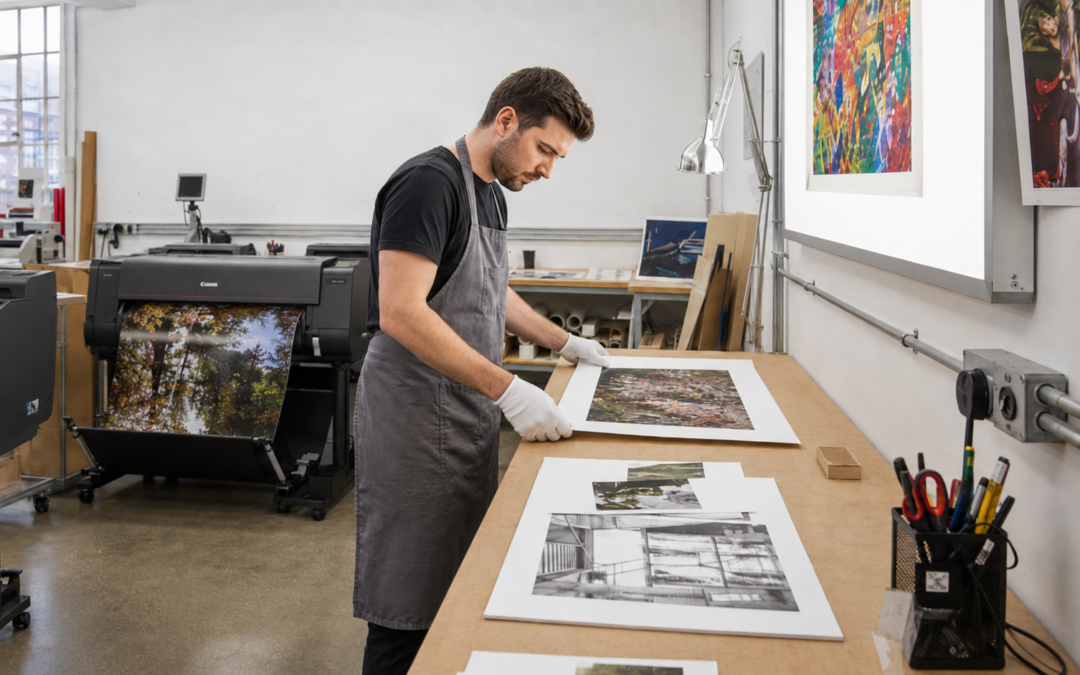
Most mornings here start the same way. The kettle goes on, the first roll of paper goes up on the printer, and somewhere between the two the phone rings with a question we have answered a hundred times before. We do not mind one bit. The questions are nearly always good ones, and the fact that people ask them usually means they care about getting their work right.
So rather than tuck the answers away behind a polished FAQ, we thought we would just tell you what we actually say when an artist or photographer calls or emails. No sales spin, no jargon for the sake of it. These are the real questions we get asked most weeks, answered by the people who stand at the bench and press the button.
Will the print actually match what I see on my screen?
Honestly, not exactly, and anyone who promises otherwise is glossing over the physics. Your screen glows. It fires coloured light straight at your eyes, so it can show punchy, saturated colour that no piece of paper can throw back at you. A print does the opposite. It sits there and reflects whatever light is in the room. So a print will always look a little more restrained than the same image on a bright display, especially in the deep blues and vivid greens.
What we can promise is that the print will be a faithful, considered translation of your file rather than a guess. We work in a colour managed studio, we soft proof against the exact paper you have chosen, and for anything important we will send you a physical proof before we run the full job. If your screen is not calibrated, that is worth knowing too, and it is the single most common reason a customer is surprised by their first print. If colour settings make your eyes glaze over, our short guide on RGB or CMYK for printing keeps it simple.
How is this different from printing it at home or at a copy shop?
Two things, really: the ink and the paper. A giclée print is made with pigment inks, which are tiny particles of colour that sit on the surface and stay put for decades. Most home and office printers, and a lot of quick print shops, use dye inks that soak in and start to shift and fade far sooner. Pair that pigment with a proper cotton or alpha cellulose art paper instead of a thin coated stock, and you get a print with depth, texture and a lifespan measured in generations rather than years. We go into the detail in giclée versus standard inkjet printing and in what archival ink actually is if you want the full picture.
Which paper should I choose?
This is the question we love most, and the one where a sample pack beats a thousand words. Everyone’s work is different, so we would rather put the papers in your hands than tell you what to like. That said, people always want our honest steer, so here it is. For most reproductions of paintings and drawings we reach for a smooth cotton rag, which stays out of the way and lets the artwork speak. For anything with a lot of surface character, an oil or a heavy watercolour, a textured paper such as a German etching gives that lovely three dimensional feel. And for photography, a baryta paper delivers the deep blacks and quiet sheen that photographers tend to fall for. Tell us about your work and we will send samples that suit it.
Is giclée even worth it for what I am doing?
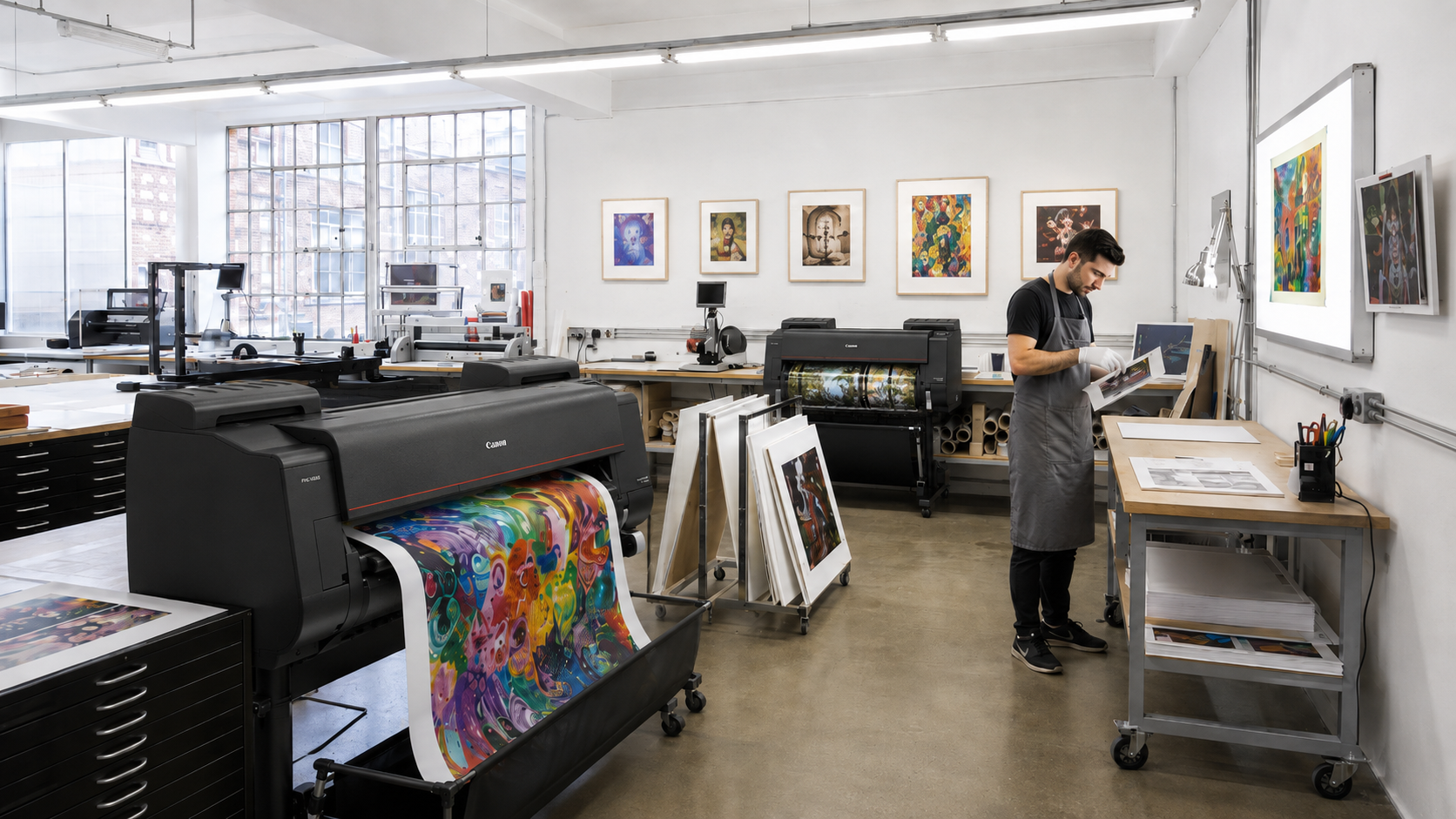
Sometimes the honest answer is no, and we will tell you so. If you want a stack of cheap postcards to hand out at a fair, a standard digital print will do the job and save you money. Giclée earns its keep when the work deserves to last and to be sold as something special: original art reproductions, signed limited editions, exhibition pieces, photography you intend to hang. We would rather point you to the right thing than sell you the expensive thing, because the artists who trust us with the small jobs are the ones who come back with the big ones.
Can you match the colours of my original painting exactly?
We get remarkably close, and colour matching is genuinely one of our favourite parts of the craft. We will work from the original where we can, take a proper capture, and fine tune against a proof until it sings. The one honest caveat is gamut. A handful of colours, certain electric fluorescents and some metallic golds, live outside what any inkjet can reproduce, because those pigments simply behave differently to ink on paper. When that comes up we will show you how close we can get and let you make the call, rather than quietly printing something that is not quite right.
Do you photograph or scan my artwork, and how big can I go?
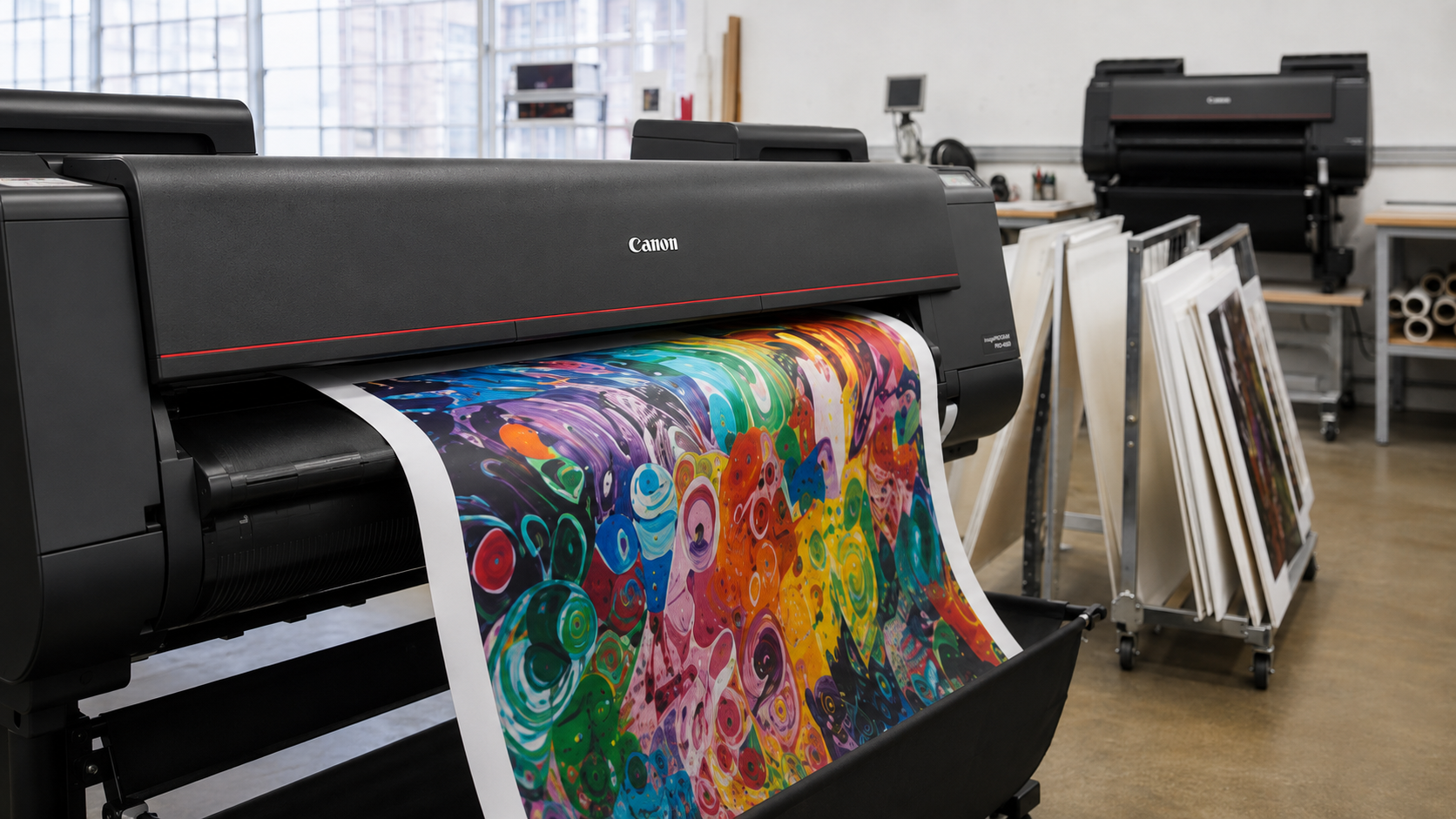
It depends on the piece. Flat work up to a certain size scans beautifully and gives us enormous, crisp detail. Larger canvases, anything with heavy texture or varnish, or work behind glass, we capture photographically with proper lighting. Either way, the size you can print without it going soft comes down to the quality of that original capture, not to any magic in the software. We are always straight with you about the ceiling. If a file will not hold up at the size you want, we will say so before you commit, not after. If you are supplying your own file, our guide on preparing your artwork files will save us both some back and forth.
How do I turn these into a proper limited edition?
Decide your edition size before you print the first one, and stick to it, because that number is the whole point of a limited edition. Sign and number each print in pencil in the lower margin, usually as a fraction, so the third print of fifty reads 3/50. Keep a simple record of what has sold. We can print a matching certificate of authenticity to go with them too. There is more on the practical side in our piece on giclée printing for artists.
How long will the prints actually last?
On the archival papers we use, with pigment inks, you are looking at colour that holds for many decades when the print is framed and cared for sensibly, out of direct blazing sunlight. That longevity is exactly why we back our work the way we do. You can read the specifics of our quality guarantee, and if the science interests you, what archival ink is explains why pigment lasts so much longer than dye.
How quickly can I get them, and do you deliver?
Most jobs turn around quickly once your proof is approved, and we will always give you a straight timescale for your particular job rather than a vague promise. We deliver right across London and the Home Counties, and we post nationwide as well, so you do not need to be local to work with us. If you are in town, our giclée printing in London page has the details, and you can see the full list of areas we cover.
Still got a question we have not answered?
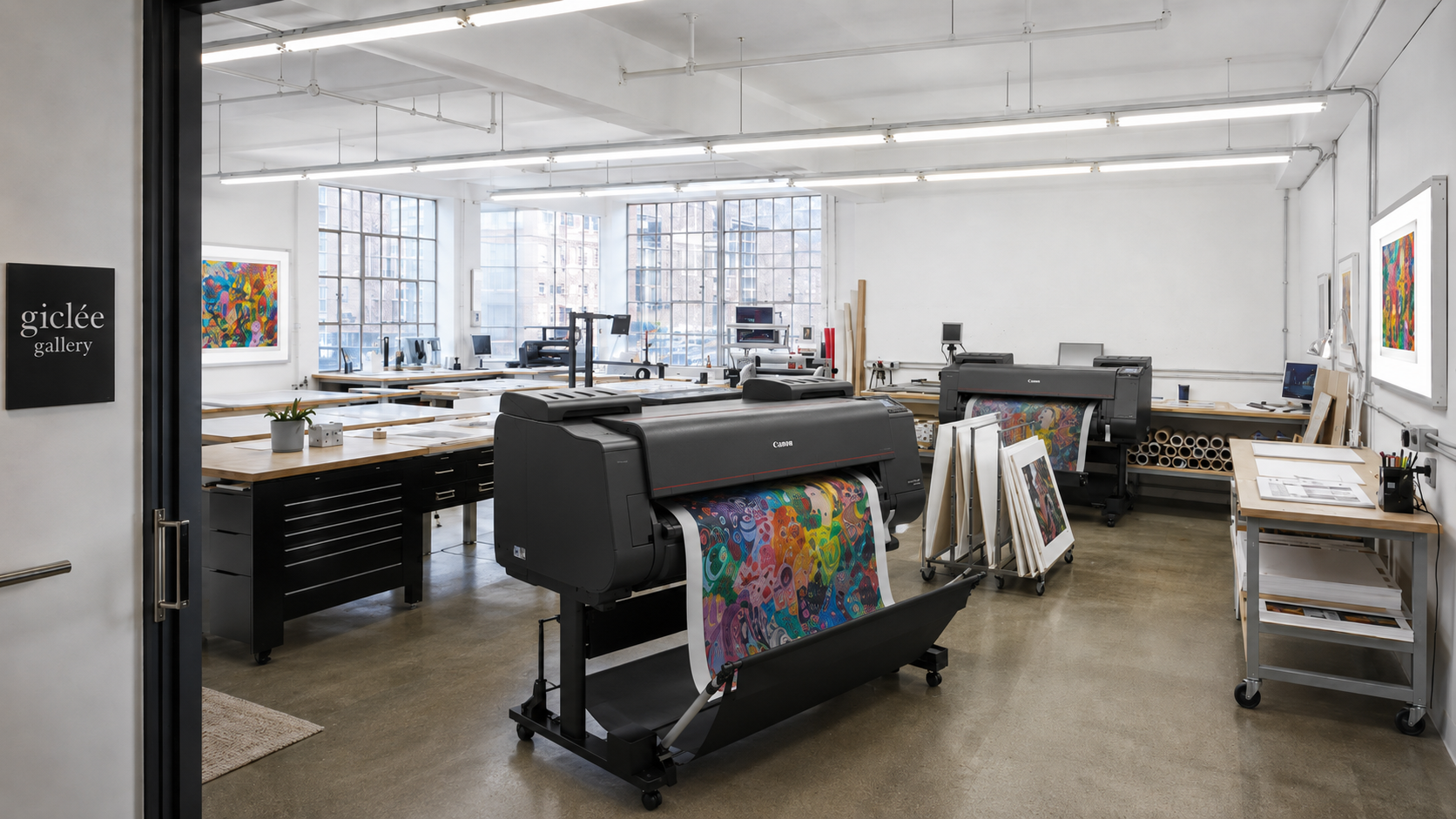
Then you are exactly the sort of person we like hearing from. Every one of the answers above started as somebody picking up the phone and asking, so please do the same. Have a look at our giclée printing service to see what we offer, take a look at how to order when you are ready, and if you are still weighing it up, just get in touch and ask us anything. We would far rather have a proper conversation about your work than send you away guessing.